

FOUNDATION
Values on a wall are decorative. Values in the work are competitive advantage.
Most organisations have articulated values. Far fewer have translated them into the specific behaviours that leaders model, managers reinforce, and hiring teams screen for. The gap between the two is where culture quietly drifts.
We work with your leadership team to define a values architecture, not a branding exercise, but a practical operating framework that shapes daily decisions at every level of the organisation. We then design the reinforcement systems that make the culture self-sustaining rather than event-dependent.
This is the work that makes everything else, retention, performance, recruitment, dramatically easier.
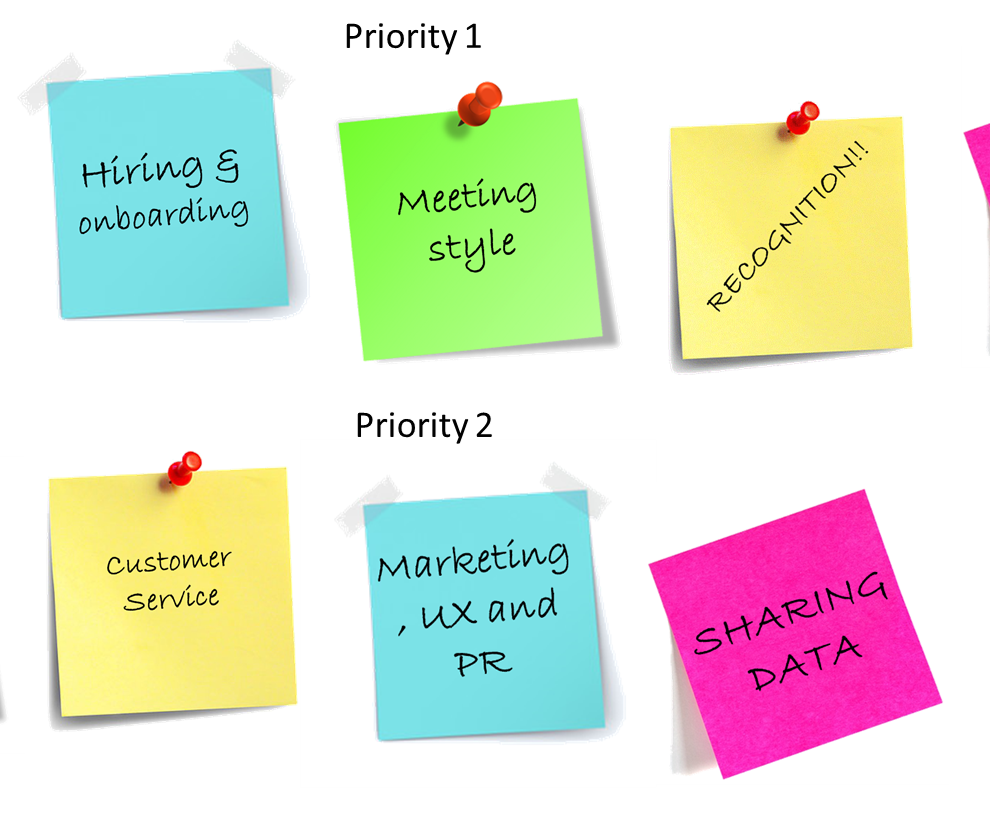
- Values definition workshops. Facilitated sessions with leadership to surface, articulate and pressure-test your foundational values.
- Behavioural translation. From statement to daily practice, what each value looks like in meetings, in hiring, in how conflict is handled.
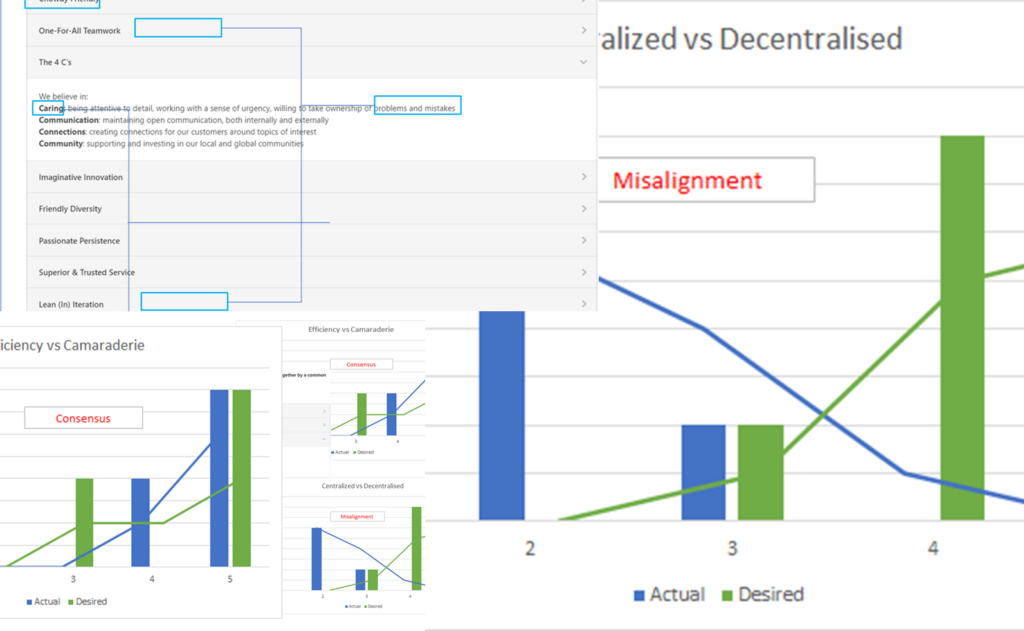
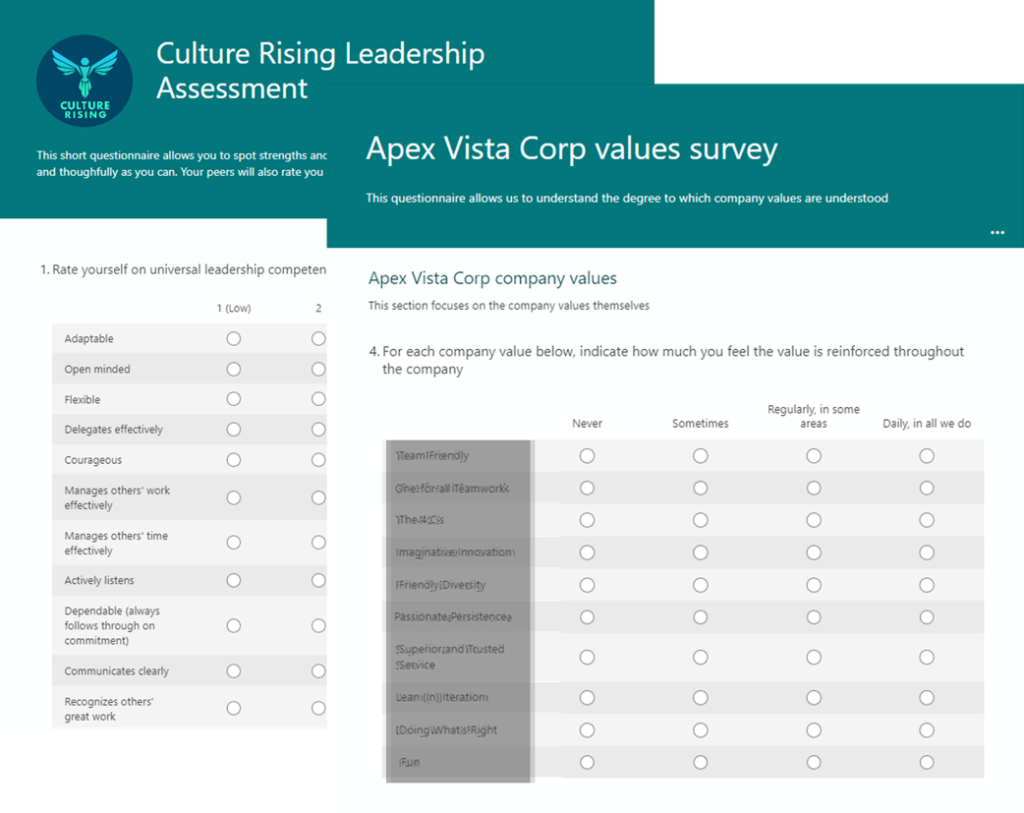
- Culture diagnostic & gap analysis. Survey and interview-based assessment of the distance between stated and lived culture.
- Reinforcement framework design. Rituals, recognition systems, onboarding design and management practices that embed values over time.
- Manager enablement toolkit. Practical tools and coaching frameworks so line managers become culture carriers, not culture blockers.
What a values architecture delivers
- Leadership team aligned on a shared definition of the culture you are building toward.
- A behavioural translation guide that makes values operational rather than aspirational.
- Clear view of the gap between your stated culture and the culture your people actually experience.
- A reinforcement framework your managers can use without additional training.
- Measurable shift in engagement scores within two to three quarters.
DIAGNOSTIC
An AI tool that keeps culture visible in the work.
Talent X-Ray is an AI system deployed across your organisation to assess talent, interests, skills and skills gaps as they show up in real work, not in an annual review cycle.
It drops small, timely nudges when company values are actually being exhibited, reinforcing the behaviours that keep a growing organisation functioning well. It doesn’t do employees’ jobs for them. It makes sure the culture you designed actually shows up in the work.
Because it operates continuously in the flow of work, X-Ray sees things annual surveys can’t: emerging skills, quiet leaders, capability gaps forming in real time, and where the culture is holding or drifting.
- Continuous capability mapping. Team strengths and gaps surfaced as they show up in the actual work, not against a generic competency framework or an annual review cycle.
- Values-in-action nudges. Small, timely reinforcements sent when the behaviours you designed are genuinely being demonstrated. Recognition becomes routine, not annual.
- Interest and growth signals. Who is stretching, who needs a new challenge. Signals surfaced early enough to maximise employee lifetime value.
- Manager coaching cues. Pattern-level information delivered to line managers so they know where and how to intervene. Individual identity is protected with our tokenised approach.
MEASUREMENT
Employee happiness on your bottom line as a measurable number.
Public company: long-term planning
For listed companies and those preparing to list, ELV provides the analytical rigour to make the people argument in the boardroom, in the same language as every other strategic investment.
- Cost of recruitment
- Lost time in market while finding new talent
- Damage to reputation
- Knowledge drain, great ideas taken elsewhere
- Cost and time to train new hires (if even possible)
- Best talent seeks you out due to brand reputation
Private company: horizon milestone (pre-IPO / exit)
For privately held companies with a growth horizon in mind, ELV reframes your people investment as an asset class with a calculable return, not a line item to be cut.
- EAS score, Employee Asset Score across the organisation
- Productivity improvement measurement and attribution
- Cashflow advantage from reduced attrition and faster onboarding
- Labour overhead repositioned as an asset class for investor narrative
Every ELV engagement delivers a single-page financial model your CFO can take into a board meeting, showing the cost of disengagement, the value of retention, and the ROI of the interventions we are recommending.
ENABLEMENT
The measure of a successful AI programme is not the number of people who attended the training. It is the number still using it differently six months later.
Most organisations are still approaching AI the same way they approach a technology rollout: licensing, a training day and a help guide. The result is predictable: a handful of enthusiasts using it daily, but the majority get little to no value from the investment.
We design AI enablement programmes that treat long-term adoption and measurable value as the outcome.
Because we have direct relationships with both Anthropic and OpenAI, the guidance we give is grounded in real capability, not vendor marketing. We understand how these platforms actually work, what they are genuinely good at, and where the limits are.
Our AI accelerator programme includes
- Basic training, onboarding and awareness. Some employees will stay here. Honestly, many roles do not need to use AI for more than search and copy generation.
- Role-specific workflows built with your non-technical users. A practical, hands-on engagement to empower teams to maintain, improve and build new workflows themselves.
- AI agentic champions. For your more technical teams. Includes agent building, best practices, governance and responsible AI use, resulting in simple but usable digital applications for your business.

Tom Trounce is an ICF-certified professional coach.